Les routes de pèlerinage oubliées du Pays de Galles : chemins sacrés à travers l’histoire et les paysages
Les routes de pèlerinage oubliées du Pays de Galles : chemins sacrés à travers l’histoire et les paysages
Forgotten pilgrimage routes of Wales: sacred paths through time and landscape
Across Wales, beneath waymarked trails and popular long-distance hikes, lie far older paths: medieval routes of devotion walked by princes, peasants, poets and penitents. These forgotten pilgrimage routes of Wales are slowly re-emerging, inviting modern travellers to experience the country not just as a destination, but as a living spiritual landscape shaped by centuries of faith, myth and movement.
For visitors interested in cultural tourism, religious heritage and slow travel, Welsh pilgrimage offers a powerful way to explore remote valleys, coastal headlands and historic churches. These routes connect saints’ shrines, holy wells and monastic ruins, revealing how Wales once formed part of a far-reaching European pilgrimage network stretching towards Rome, Santiago de Compostela and Jerusalem.
The medieval tradition of pilgrimage in Wales
Medieval Wales was a country of saints as much as of castles. From the early Middle Ages, holy men and women founded small monastic communities and hermitages in isolated corners of the landscape. Over time, their tombs, chapels and relics became centres of local devotion and long-distance pilgrimage.
Pilgrimage in Wales was shaped by several key influences:
- The Celtic Christian tradition, with its emphasis on remote hermitages, island retreats and intense personal devotion.
- Links to Irish and Breton saints, creating a shared spiritual geography across the Irish Sea and the western seaboard of Europe.
- The growth of monastic orders such as the Cistercians, who established abbeys connected by tracks that soon became well-trodden religious routes.
- The rise of saints’ cults, especially those of St David, St Winefride and the more enigmatic saints associated with Bardsey Island.
By the later Middle Ages, certain Welsh shrines were so prestigious that completing multiple journeys could be equated with the great continental pilgrimages. Three visits to St Davids, it was said, were worth one pilgrimage to Rome. Bardsey Island, with its legendary “20,000 saints” buried in its soil, was even credited as a place where three pilgrimages equalled one to Jerusalem.
St Davids and the rediscovery of ancient approaches
On the far western edge of Pembrokeshire, the small city of St Davids was once one of the most important pilgrimage destinations in Britain. Pilgrims came to venerate the relics of St David (Dewi Sant), Wales’s patron saint, whose shrine in the cathedral drew kings and commoners alike.
The route itself varied according to where pilgrims set out, but many arrived along the coast from the north or south, following tracks that broadly match today’s Pembrokeshire Coast Path. Fishing villages, chapels and holy wells along the cliffs once served as waystations for travellers, offering simple lodgings and spiritual services.
In recent years, initiatives such as the Wales Coast Path and locally promoted “St Davids Pilgrim Ways” have helped reframe these trails as modern spiritual journeys. Without rigid historical reconstruction, they invite walkers to:
- Follow older patterns of movement along the coast and inland valleys.
- Visit pre-Reformation churches and carved crosses hidden in farmyards.
- Pause at “Ffynhonnau” (holy wells), once believed to cure illness or offer prophetic insight.
Though not always formally branded, these sacred paths echo the journeys of medieval Welsh pilgrims venturing to the “edge of the world” in search of blessing and absolution.
North Wales Pilgrim’s Way: from holy mountain to island shrine
The best-known modern reconstruction of a historic Welsh pilgrimage is the North Wales Pilgrim’s Way. This long-distance route links Basingwerk Abbey near Holywell to the ferry across to Bardsey Island on the Llŷn Peninsula, weaving together historic “llwybrau pererinion” (pilgrims’ paths).
Rather than a single medieval track, it is a thoughtful alignment of:
- Ancient churches dedicated to early Welsh saints.
- Prehistoric standing stones and burial sites.
- Monastic foundations and ruined chapels.
- Natural landmarks that carried spiritual meaning, such as mountain passes and coastal headlands.
In North East Wales, pilgrims traditionally visited St Winefride’s Well at Holywell, one of the oldest continually visited pilgrimage sites in Britain. From there, routes moved westwards, crossing the Clwydian Hills, skirting Snowdonia and heading for the sacred end-point of Bardsey.
For modern travellers, the North Wales Pilgrim’s Way offers:
- A walking journey of roughly two weeks, broken into accessible stages.
- Opportunities to attend services in ancient village churches still in use.
- Immersion in diverse landscapes, from heather moorland to quiet coastal coves.
It also highlights how pilgrimage in Wales was not solely about one shrine, but about networks: a chain of holy places threaded across the land.
Bardsey Island: the “island of 20,000 saints”
At the tip of the Llŷn Peninsula, barely two kilometres off the mainland, Bardsey Island (Ynys Enlli) has exerted a spiritual pull for over a millennium. In medieval texts, it appears as a place of final retreat and burial for the devout. Its reputation as “the island of 20,000 saints” reflects both its role as a burial ground and the idea that its soil was spiritually charged.
Reaching Bardsey was an undertaking that demanded effort and risk. Pilgrims walked along the peninsula, visiting chapels and crosses set high above the sea, then waited at Porth Meudwy or nearby coves for a boat crossing, dependent on tides and weather. The journey’s uncertainty reinforced the sense of pilgrimage as a test of faith.
Today, crossings are arranged in season, and walkers can still:
- Follow ancient lanes and green tracks to the western tip of Llŷn.
- Pass church sites linked to saints such as Beuno, Hywyn and Cybi.
- Experience Bardsey as a place of quiet retreat, where farms and a small monastery once stood.
As a place where terrestrial paths give way to sea and sky, Bardsey encapsulates the distinctive character of Welsh pilgrimage: intimate, wild and deeply rooted in local tradition.
Cistercian routes and monastic networks
Another layer of forgotten pilgrimage in Wales lies in the web of paths that once connected Cistercian abbeys and their outlying granges. In the twelfth and thirteenth centuries, orders such as the Cistercians founded monasteries at sites including Tintern, Strata Florida, Valle Crucis and Cymer. Though focused on austere monastic life, these houses also attracted visitors and pilgrims.
The modern Cistercian Way is an attempt to trace a long-distance circular route around Wales linking these abbeys and other religious sites. While more of a contemporary creation than a single historic pilgrimage, it draws heavily on:
- Old drovers’ roads used by monks to move livestock and goods.
- Valleys that historically connected monastic estates and market towns.
- Patterns of medieval travel that naturally converged on abbeys as centres of economic and spiritual life.
For travellers interested in both history and hiking, following sections of the Cistercian Way reveals how monastic Wales was integrated into wider European religious networks, importing architectural ideas, liturgical practices and devotional trends from the continent.
Holy wells and local shrines: the micro-geography of devotion
While major shrines such as St Davids and Holywell drew international pilgrims, much of Welsh pilgrimage was local and intimate. Holy wells, modest chapels and small roadside crosses created a dense web of sacred spots that shaped everyday movement.
Dozens of wells dedicated to saints like St Non, St Cybi or St Teilo survive in ruined or restored form, often:
- Hidden at the edge of fields or woodland.
- Adorned with simple stone structures or carved basins.
- Associated with specific cures, rituals or patterns (annual local processions).
Walking between such sites today may not always follow signposted “pilgrim routes”, but local rights of way and parish paths frequently echo historic ways. A day’s walk linking a cluster of wells and churches can recreate the experience of micro-pilgrimage: short, repeated journeys made for healing, thanksgiving or seasonal devotion.
Experiencing Welsh pilgrimage routes today
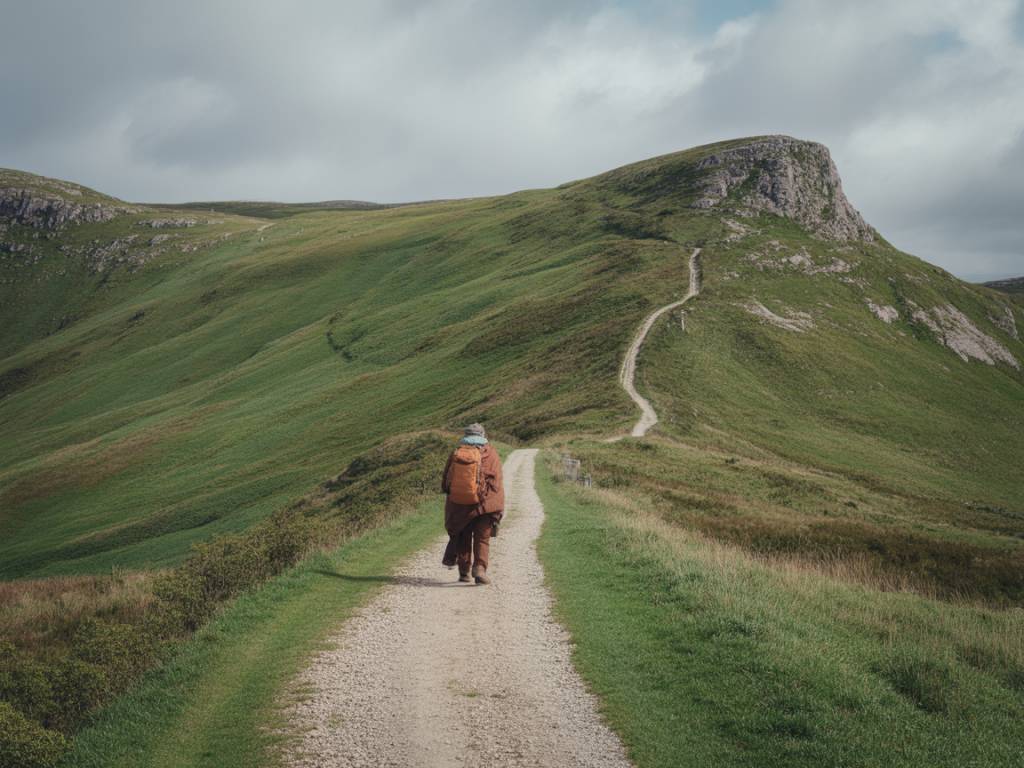
For modern visitors, the renewed interest in pilgrimage routes in Wales aligns with broader trends in slow, sustainable and experiential tourism. Rather than rushing from attraction to attraction, these sacred paths encourage:
- Walking at a human pace, engaging with landscape, weather and local communities.
- Visiting smaller, lesser-known churches and chapels far from main roads.
- Reflecting on personal motivations, whether religious, spiritual, cultural or simply a desire for quiet.
Several routes, such as the North Wales Pilgrim’s Way and emerging St Davids approaches, are now supported by:
- Guidebooks and maps highlighting historical and spiritual points of interest.
- Websites listing accommodation, from simple B&Bs to retreat houses.
- Local initiatives involving churches, community groups and heritage organisations.
Even where waymarks are absent, the concept of pilgrimage provides a fresh way to interpret familiar routes: a coastal path becomes a line of ancient chapels; a mountain pass, a traditional boundary between sacred districts; a quiet lane, the remnant of a once-busy road of devotion.
Why these forgotten routes matter
The recovery of forgotten pilgrimage routes in Wales is not just about adding new walking products to the tourism offer. It speaks to deeper questions about how European history is remembered, how landscapes hold cultural memory and how spiritual traditions adapt to new contexts.
For historians, these routes help illuminate:
- Patterns of medieval travel and communication across a rugged, decentralised country.
- The interaction between Welsh-language devotional culture and broader European Christianity.
- The role of local saints in shaping regional identity and politics.
For travellers, they offer:
- A chance to experience Wales beyond its castles and coastal resorts.
- Encounters with communities where small churches and chapels remain living centres of faith.
- Moments of quiet in landscapes where the traces of past devotion are still visible in stone, water and place-names.
In walking these sacred paths, visitors participate in a tradition that once connected Wales to the great pilgrimage currents of Europe. The routes may have faded from common knowledge, but their revival allows a renewed encounter with the layered history, spirituality and distinctive landscapes of this corner of the continent.