The lost chapels of Wales: abandoned sanctuaries and the stories they keep
The lost chapels of Wales: abandoned sanctuaries and the stories they keep
The quiet allure of Wales’s lost chapels
Across the hills, coastal valleys and post-industrial towns of Wales, hundreds of abandoned chapels sit in silence. Once filled with hymn-singing congregations and fiery sermons, these forgotten sanctuaries now stand as ghostly witnesses to social change, religious transformation and demographic decline. For travellers interested in Welsh history, cultural tourism or off-the-beaten-path exploration, the lost chapels of Wales offer a powerful window into a vanished world.
From ivy-covered Methodist chapels in Snowdonia to empty Baptist meeting houses in the Valleys, these buildings chart the rise and fall of Nonconformist religion and the communities that built them. Their stories intertwine with industrialisation, language politics, revivalist Christianity and the shifting patterns of belief in modern Europe.
Why Wales was once a land of chapels
To understand why so many sanctuaries now stand abandoned, it helps to recall why they were built in such numbers. During the nineteenth century, Wales experienced a dramatic religious transformation. While the established Anglican Church of England dominated official religious life, the emotional heart of Welsh spirituality beat in the chapels of the Nonconformists: Methodists, Baptists, Congregationalists and others.
These chapels:
- Were often founded by local communities rather than wealthy patrons
- Served as centres of Welsh-language preaching and education
- Acted as social hubs, hosting meetings, choirs and political gatherings
- Reflected the pride and identity of working-class and rural communities
During the great religious revivals of the nineteenth and early twentieth centuries, attendance soared. Miners, quarrymen, farmers and small-town shopkeepers poured time and money into building increasingly elaborate chapels, often out of proportion to the size of the communities they served. The chapels became landmarks of faith and cultural identity, dotting every valley and hilltop.
The slow fading of Nonconformist Wales
The decline of these chapels did not come all at once. It unfolded gradually across the twentieth century, driven by a combination of social, economic and cultural changes. Industrial decline emptied the coalfield valleys and slate-quarrying districts; younger generations left for English cities or coastal resorts. At the same time, secularisation diminished church attendance across Europe, and Wales was no exception.
By the late twentieth century, many congregations could no longer afford to maintain large buildings. A process of consolidation began: smaller chapels closed and worshippers merged with nearby congregations. Some buildings found new life as community centres, houses or arts venues, while others fell into disuse, their organs silent, their galleries gathering dust.
The result today is a remarkable landscape of religious ruins and semi-ruins. Some sit in prominent positions on town high streets, boarded-up and awaiting an uncertain future. Others lie hidden at the end of narrow lanes, overgrown and half-forgotten, their pointed windows now framing only sky and brambles.
Architectural diversity: from simple meeting houses to chapel palaces
One of the surprises for many visitors is the architectural range of Welsh chapels. The phrase “abandoned chapel” might suggest a simple stone hut on a remote hillside, and there are certainly many modest rural examples. But the Nonconformist building boom produced a startling variety of styles:
- Vernacular chapels: modest rectangular buildings, often in local stone, with minimal decoration and small windows.
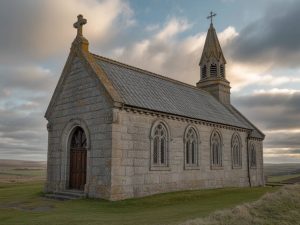
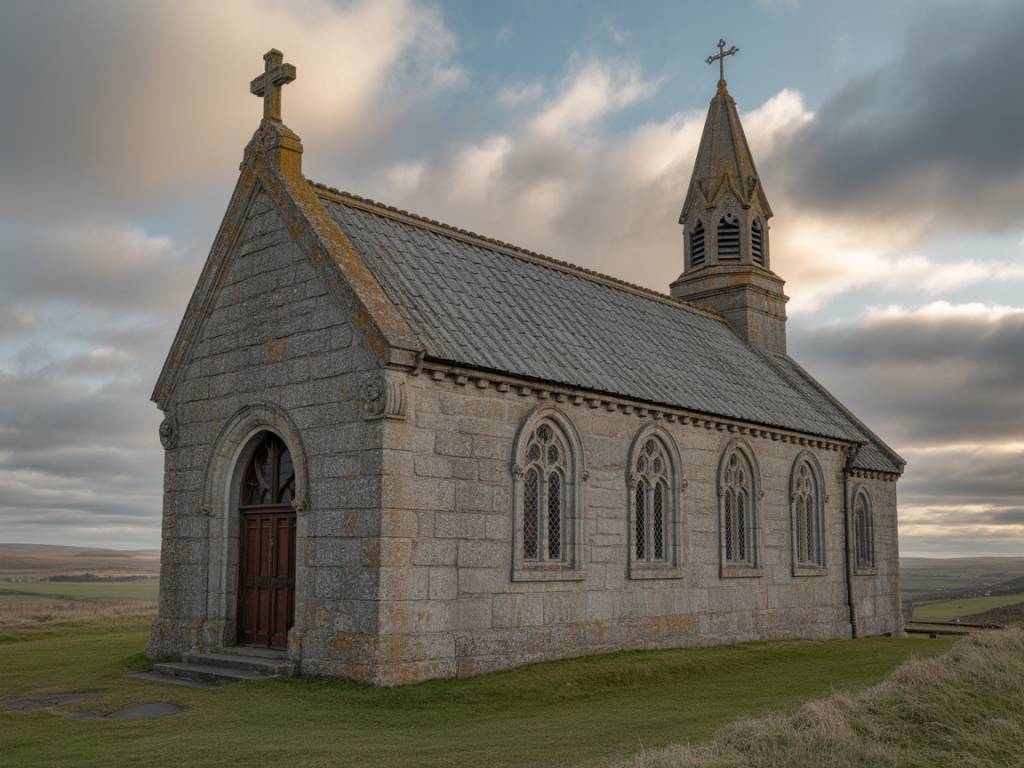
- Gothic-inspired sanctuaries: incorporating pointed arches, stained glass and decorative stonework that echo medieval churches.
- Classical facades: featuring pediments, columns and imposing entrances, projecting confidence and respectability.
- “Chapel palaces” of the Valleys: grand, multi-storey structures designed to contain large congregations and magnificent organs.
In many abandoned chapels, traces of their former glory remain visible. Faded scriptural texts still span gallery fronts; intricate woodwork survives in pulpits and pews; fragments of coloured glass catch the light. Even the simplest ruined chapel retains atmospheric details: worn stone thresholds, weathered gravestones, or iron railings entwined with moss.
Stories preserved in stone and memory
Each abandoned chapel carries its own web of stories, often only partially recorded. Some are tied to major historical moments. During the nineteenth century, chapels were meeting places for political radicals, campaigners for workers’ rights and advocates of Welsh cultural revival. Their pulpits hosted debates in the Welsh language about temperance, education and national identity.
Other stories are more intimate and local. Chapels saw generations pass through birth, marriage, conversion and death. The surrounding graveyards, where they survive, record surnames that trace family histories and migration patterns. Many tombstones are inscribed in Welsh, preserving dialect words and biblical phrases no longer heard in everyday speech.
For communities that have largely dispersed, the abandoned chapel can function as a geographical anchor for memory. Former residents returning to a shuttered building often recall:
- Walking miles as children to Sunday school
- Learning to read music through choral practice
- Attending emotionally charged revival meetings
- Listening to renowned preachers whose oratory shaped local opinion
For these individuals, the lost chapel of Wales is not just an architectural relic but a container of personal and collective memory.
Exploring abandoned chapels: practical and ethical considerations
Travellers drawn to dark tourism, industrial archaeology or religious history may be tempted to seek out these remote sanctuaries. Wales lends itself to such exploration: quiet lanes, open access land and close-knit valleys make discovery possible even without detailed maps. However, visiting abandoned chapels requires care and respect.
Many of these buildings are on private land. Seeking permission from landowners where possible is not only courteous but often essential. Even when a chapel appears derelict, it may still be legally owned and potentially dangerous to enter. Roofs can be unstable, floors rotten, and loose masonry a real hazard.
Ethically, responsible tourism is key. These are not just “ruins” but places with ongoing emotional significance. Visitors should:
- Avoid forcing entry into locked or clearly unsafe structures
- Refrain from removing artefacts, however small
- Take photographs carefully, without climbing on fragile features
- Maintain silence or a quiet demeanour, especially where graveyards are present
In some areas, local heritage groups organise guided walks or talks that include abandoned chapels. Joining such initiatives allows travellers to gain context, meet community members and support preservation efforts.
Preservation, loss and adaptive reuse
The future of Wales’s lost chapels is uncertain. Some buildings are already beyond repair, slowly collapsing back into the landscape. Others remain structurally sound but underused, waiting for a viable new purpose. Heritage organisations, local councils and community groups face difficult choices about which chapels can realistically be saved.
A growing number of projects have explored adaptive reuse. Former chapels have been converted into:
- Local museums or heritage centres
- Arts venues and small theatres
- Residential homes and holiday rentals
- Studios for artists or musicians
These transformations can be controversial. Some feel that turning a sanctuary into a luxury holiday cottage undermines its spiritual history. Others argue that sensitive conversion is preferable to total loss. In the best cases, original features are retained and interpreted for visitors, with information panels that explain the building’s religious significance.
For heritage tourism in Wales, these adapted chapels can serve as gateways into wider stories of Nonconformist culture, industrial heritage and linguistic identity. They allow travellers to sleep, listen to concerts or attend exhibitions in spaces once shaped by communal worship, blurring boundaries between past and present.
Lost chapels, living culture
Although many chapels lie empty, the cultural forces that created them have not entirely vanished. The Welsh language remains strong in many rural areas and has experienced a resurgence in education and media. Choral traditions continue in male voice choirs, mixed choirs and community ensembles across the country, often drawing on the same hymn tunes that once echoed within chapel walls.
For visitors, this means that exploring abandoned chapels in Wales is not simply an exercise in nostalgia. It can also prompt engagement with living cultural practices: language, music, poetry and local festivals. A day spent seeking out a weathered chapel ruin in a Carmarthenshire valley might be followed by an evening in a village hall listening to a choir rehearse, or in a pub where Welsh is the dominant language.
The lost chapels of Wales therefore function as historical markers in a landscape where identity is still actively negotiated. They invite questions about faith and doubt, about the price of industrial decline, and about how small nations remember their pasts within a wider European context.
Planning a heritage-focused journey among Wales’s chapels
For travellers interested in designing an itinerary around abandoned or historic chapels, careful research is worthwhile. While guidebooks often highlight major cathedrals and castles, information on lesser-known Nonconformist sites can be scattered. Useful starting points include:
- Local archives and county record offices, which often hold chapel histories and photographs
- Regional heritage trails focusing on industrial or religious history
- Online databases and mapping projects documenting disused chapels
- Local history societies and Welsh-language publications
Combining chapel visits with other heritage attractions—such as slate quarries in the north, coal mining museums in the south, or rural folk museums in mid-Wales—helps place these sanctuaries within broader historical narratives.
Whether glimpsed from a roadside while driving through a rain-swept valley, or carefully sought out at the end of a long footpath, the abandoned chapels of Wales reward patient, thoughtful travel. They encourage a slower pace, an attentiveness to detail and a willingness to listen to the quiet stories held in stone, timber and fading paint. In doing so, they offer one of the most evocative ways to encounter the layered history of this small but culturally rich corner of Europe.